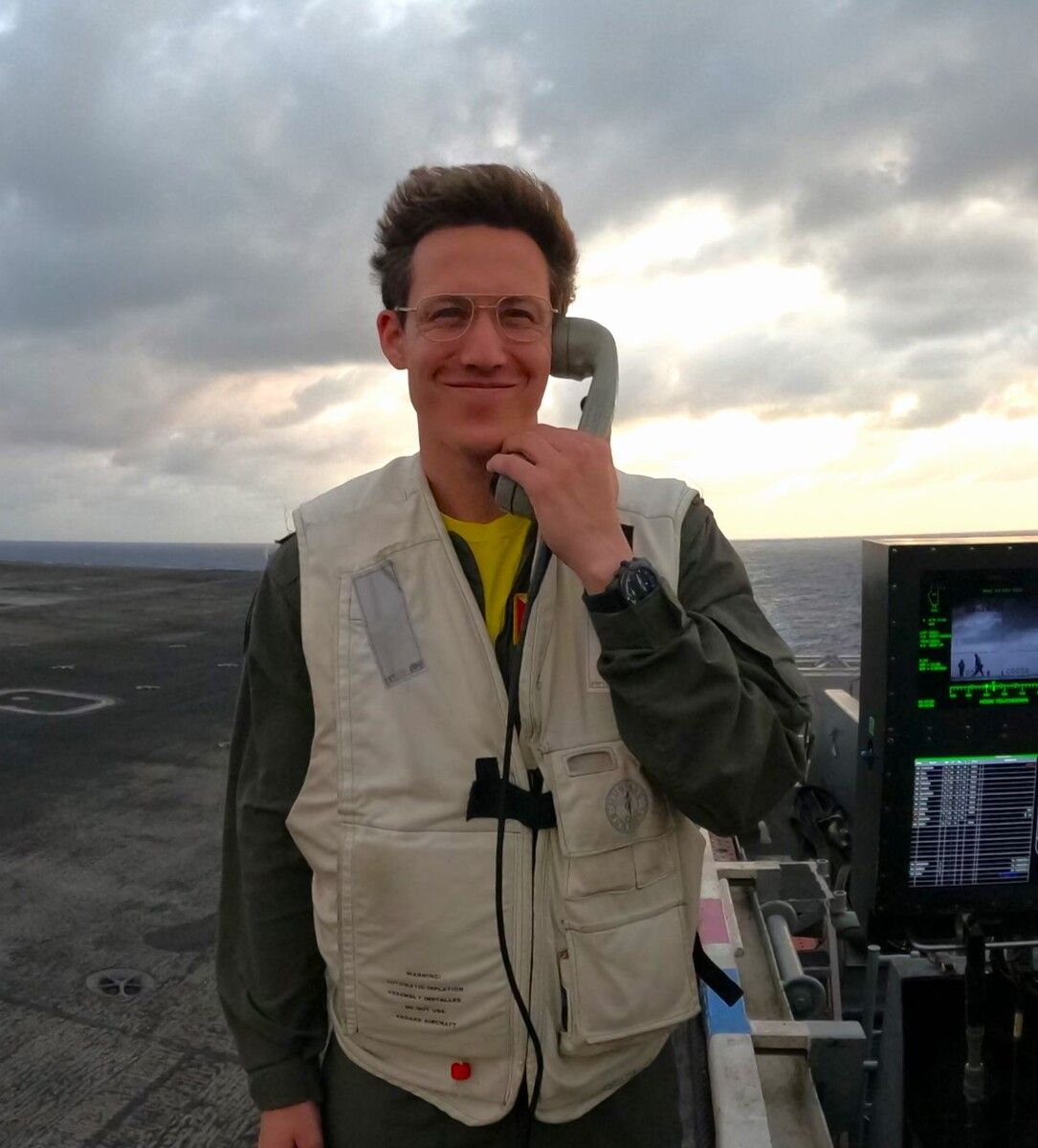
Editor’s Brief1
Last week, we looked at Hadrian, an advanced manufacturing company building automated factories for aerospace and defense production.
This week, I’m updating and re-releasing an article on Allen Control Systems after their recent $200M Series B.
As always, your feedback shapes our coverage—reply directly with insights or questions.
Signal Brief: Allen Control Systems: Cost Cutting Kinetic Autonomy
Allen Control Systems (ACS) builds Bullfrog, a family of autonomous robotic weapon stations designed to turn service-common weapons into precision counter-drone systems. Instead of relying on expensive interceptors, Bullfrog bolts advanced sensing, computer vision, high-speed stabilization, and fire-control software onto weapons such as the M240 and M2 to create a low-cost kinetic defeat layer against small drones.
Origins & Vision
Founded in 2022 by Mike Wior, Steve Simoni, and Luke Allen, ACS recognized that Western forces cannot out-produce state-subsidized drone manufacturing, so the only scalable counter is a high-volume defeat mechanism built around ammunition the U.S. already stockpiles. Co-founders Steven Simoni and Luke Allen, met in the U.S. Navy, serving as nuclear submarine engineers control systems engineers for naval nuclear reactors.
ACS emphasizes passive sensing, open architecture, and compatibility with common C2 systems (ATAK, FAAD C2, and Anduril Lattice). The product family has expanded beyond the Bullfrog family and now offers unbundled fire-control software, passive drone detection, and synthetic training-data generation.
The company had early success when the Bullfrog was the only autonomous kinetic defeat solution selected for TREX 24-2 and later reported Army results at Project Convergence Capstone 5: all seven in-range drone targets killed in one breach scenario, more than 40 soldiers qualified on the system in under 30 minutes, and deployment from storage to operational readiness in under two minutes.
In February 2026 ACS tripled Austin operations to more than 57,000 square feet to scale low-rate initial production and RDT&E for U.S. and allied deliveries. In June 2026, the company completed a $200 million Series B at a post-money valuation of $2.2 billion.
Key Takeaways
The cost curve is the product — Bullfrog's value proposition is a ~$10 cost-per-kill against targets that currently absorb interceptors costing thousands to millions per shot with extremly high accuracy.
A precision layer for legacy iron — ACS bolts autonomy onto the M240, M2, and (in development) M230 and M134, integrating with ATAK, FAAD C2, and Anduril's Lattice.
DoD demand signal — JIATF 401 stood up in 2025 specifically to accelerate affordable counter-small-UAS capability. The Army's FY2026 budget flags an $858 million counter-UAS line. ACS is surfing a priority, not inventing one.
Tech Radar:
The variants span the threat spectrum: the M240 (7.62mm, Group 1–3, ~800m effective range), the M2 (.50 cal, Group 1–3+, ~1,500m point-target), and in-development M230 (30mm chain gun) and M134 (minigun) builds for larger systems and dense swarms.
Key Capabilities
Passive Optical Detection: A camera array detects and identifies incoming threats without emitting RF signals.
Edge Computer Vision: Custom convolutional neural networks trained on millions of annotated images, with a claimed false-negative rate under 2%.
Proprietary Control Algorithms: Software calculates real-time lead angles, windage, and ballistic drops, adjusting the physical gimbals to achieve a pointing accuracy of under 1 Minute of Angle (MOA)
Minimal training required - War fighters trained in ~30 minutes. Designed for use under stress.
To retrain quickly against novel drone designs, ACS uses a synthetic data pipeline generating photorealistic training imagery with auto-labeled bounding boxes, reportedly far faster than manual annotation. The fire-control software can also be unbundled and licensed to other remote weapon stations, widening the product surface beyond Bullfrog-branded hardware.
ACS is extending past the gun: laser dazzlers for blinding optical sensors, composite/rubber rounds for low-collateral defeat, encrypted "return to home" commands for non-kinetic takedowns, and a Friend-and-Foe Operating System (FAFOS) for unmanned platforms which is a radio-silent optical IFF system with sub-200ms authenticated identification out to 2 km. The long-term ambition is to own more of the sense–identify–decide–defeat stack, not just the kinetic moment.
Market Signals
Funding & Growth
Total Funding: $242M across three rounds
Latest Round: $200M Series B (Jun 2026)
Notable Investors: Smash Capital, Craft Ventures, Inspired Capital, Rally Ventures, Forum Ventures, Litquidity Ventures
Valuation: $2.2B
Contracts & Government Traction
Army Bullfrog CUAS feasibility study — ~$1.6 million
Army Applications Lab — $1.5 million with options to $4.5 million, for a five-platform combat-vehicle integration readiness plan (Abrams, Bradley, et al.)
xTechOverwatch — $2 million Direct-to-Phase-II SBIR, top prize
International — undisclosed delivery contracts with South Korea and the UAE; a co-production MOU with Romania; an undisclosed maritime SOF contract
Demonstrations & Partnerships
Operation Jailbreak (Fort Carson, 2026): ACS, Anduril, AZAK, Havoc, Leonardo DRS, and Picogrid assembled an autonomous hunter-killer UGV in under 48 hours — a Bullfrog on an AZAK chassis, Havoc autonomy, DRS radar, all routed through Lattice.
Red Cat / Blue Ops V7 USV: Bullfrog M240 integrated onto a diesel USV as a waterborne air-defense node against Shahed-class loitering munitions.
Looking Ahead
I was recently in a conversation about the cost curve of drone interceptors after the Iran War started. The common refrain (one I've made myself) is that "million-dollar missiles to take down thousand-dollar drones" isn't sustainable. A Houthi anti-ship ballistic missile costing roughly $50,000 can force the Navy to expend an SM-2 worth $2.1 million or an SM-6 worth $4.3 million.
However, the counter-argument made was that “the relevant comparison isn't between the interceptor and the threat it destroys, but between the interceptor and the loss it prevents.” Iranian strikes on U.S. military bases in the Middle East caused roughly $800 million in damage in the first two weeks of the war.
Framed that way, a few million dollars per shot to prevent $800 million in damage looks less like waste and more like buying puts on your favorite stock. Yes, there is some drag on the upside but it limits catastrophic loss on the downside.
And the data on interceptor costs shows between 2018 and 2023 the unit costs actually declined every year on an inflation-adjusted basis for some SM6 and ESSM variants.

(The 2024 spike in SM-6 unit costs came from procuring the new Block IB variant with an extended-range second-stage rocket motor.)
And no system achieves 100% probability of kill. Even if a lower-cost system did, it could still be overwhelmed by simultaneous multi-axis attacks.
So you need long-range interceptors taking down threats at distance. Some get through, and medium-range systems handle those. Even at 99% effectiveness, one drone closes to short range. That's where you need a last layer.
Which where Bullfrog fits. It echoes an idea that's been aboard U.S. Navy ships since the 1970s: CIWS. Just as ships have long relied on semi-automated close-in weapon systems to kill missiles that penetrate outer defensive layers, forward units now need their own autonomous last-ditch defense against drones.
Bullfrog is a tactical CIWS for the warfighter. And critically, ACS isn't asking the government to buy a new weapon. They're offering a way to upgrade what's already fielded rapidly, affordably, and in alignment with current policy.
Autonomy at the edge. Redundancy in the kill chain.
Challenges
Acquisition headwinds. ACS has built early traction through non-traditional pathways (SBIRs, OTAs, xTech prizes, direct foreign purchases) but the harder work is converting that into a formal program of record.
Scale-up execution. ACS now has to launch a 300,000 sq ft facility, lock long-term component supply, and deliver thousands of turrets at consistent quality.
Weapon system trust. Bullfrog has to outshoot humans in the scenarios where everything upstream has already failed and the threat is inside the wire. That bar is high, and there are no do-overs.
Bottom Line
Most drone defense solutions fall into two buckets: soft-kill (jamming, microwaves) and hard-kill (bullets, missiles). ACS is upgrading the traditional hard-kill layer instead of replacing it. Coupled with autonomy at the edge, plug-and-play integration with existing weapons, and a passive architecture that operates without satellite uplinks or high-power infrastructure, Bullfrog is positioning itself as part of the new force design.
However, as I wrote in a previous piece, there are no silver bullets. Not Bullfrog, or Castelion, or Epirus. But combined, these become part of the many systems we will need to keep warfighters safe in the fight ahead.
1 The views expressed in this newsletter are my own and do not represent the views of the U.S. Navy, Department of Defense, or any government agency. Mention of companies, technologies, or products is not an endorsement or recommendation. The content is for informational purposes only and should not be considered investment advice.