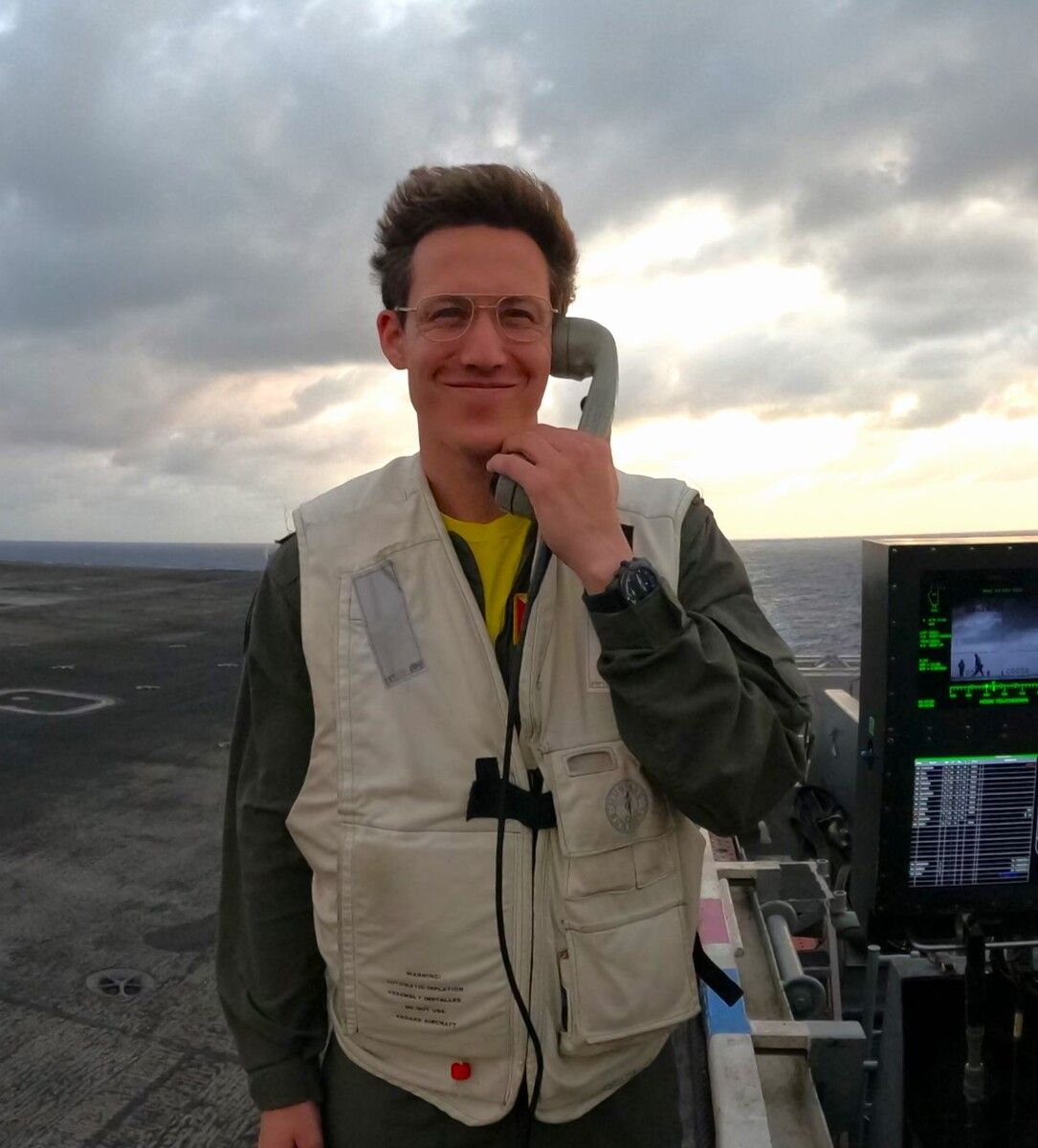
Editor’s Brief1
Last Week, was Part 1 of the Shipbuilding Crisis series: the shipbuilding budget has roughly doubled over two decades and the fleet still hasn't sustainably crossed 300 ships since 2003.
This week, we look at the next two parts of the shipbuilding system: the industrial base and the programs.
As always, your feedback shapes our coverage—reply directly with insights or questions.

Signal Brief: The Shipbuilding “Crisis” — Part 2
In May 2025 the US Maritime Administration (MARAD) released their Survey of U.S. Shipbuilding and Repair Facilities. It is a flawed document, containing methodology errors, internally inconsistent counts, and omitting data categories (commercial orderbook, workforce levels, annual capital expenditure) that the 2004 version included, but it remains one of the few repositories of both major and intermediate shipyards in the US.
While we have seen modest growth in yards that build ships, from 9 in 2004 to 11 today, the number of places to repair ships has decreased by anywhere from 27–40%. Compare that with China’s capacity which is estimated to be ~200 greater than ours.
So who does build our ships and what are they building?
The Maritime Industrial Base
There are seven major shipyards that build the Navy's battleforce ships, with two companies taking the lion's share of the work.

General Dynamics ($GD ( ▲ 0.12% )) operates three of the most strategically critical yards in the country. Electric Boat, with facilities in Connecticut and Rhode Island, is the prime contractor and lead designer for every U.S. nuclear-powered submarine program.
Bath Iron Works in Maine builds Arleigh Burke-class (DDG-51) guided-missile destroyers and built the Zumwalt class.
NASSCO in San Diego builds auxiliary and support vessels (fleet oilers, expeditionary sea bases) and is the principal repair hub for the Pacific Fleet.
GD's Marine Systems segment generated $16.7 billion in revenue in 2025, with nuclear-powered submarines accounting for $12.6 billion of that total. Operating margin was 7.0%, with 2026 guidance projecting $17.3–$17.7 billion at approximately 7.3%.
Huntington Ingalls Industries (HII) ($HII ( ▼ 0.04% )) is the largest dedicated military shipbuilder in the United States.
Newport News Shipbuilding in Virginia is the exclusive builder of nuclear-powered aircraft carriers and shares Virginia-class submarine production with Electric Boat.
Ingalls Shipbuilding in Pascagoula, Mississippi builds Arleigh Burke-class destroyers, San Antonio-class amphibious transport docks (LPD-17), and America-class amphibious assault ships.
HII reported $12.5 billion in revenue in 2025 with 8.2% year-over-year growth. With a market cap near $13.3 billion and an operating margin of approximately 5%, HII trades at roughly 1x revenue.
Beyond GD and HII, several other yards hold important roles.
Fincantieri Marine Group, Italian-owned and operating out of Wisconsin, was the lead yard for the now-canceled Constellation-class frigate and builds the Freedom-variant Littoral Combat Ship.
Austal USA, an Australian-owned yard in Mobile, Alabama, builds the Independence-variant LCS, Heritage-class Coast Guard cutters, and is now manufacturing Saildrone Surveyor unmanned surface vehicles.
Bollinger Shipyards handles Coast Guard fast response cutters and has been selected as a builder for the new Medium Landing Ship program. Eastern Shipbuilding Group in Florida holds the Coast Guard's Offshore Patrol Cutter contract. Hanwha Philadelphia Shipyard, recently acquired by South Korea's Hanwha, focuses on Jones Act commercial tankers and government auxiliaries.
The full major shipbuilding and repair base, including yards that can repair or drydock but not build totals 64 facilities across all regions.
The Programs

The newest Navy Shipbuilding Plan operationalizes the Golden Fleet concept around a high-low mix:
High-End Combatants: Survivability, command and control, and massed fires (CVN, SSBN, SSN, BBGN, DDG, LHA, LPD)
Low-End Combatants: Presence, scalability, and distributed operations (Frigate, LCS, LSM)
Unmanned Systems: Tailorable mass, sensing, deception, and attritable combat power (MUSV, SUSV, UUV)
Logistics and Support: Sustained operations in contested environments (T-AO, T-AOL, AS(X), Sealift)
Interesting programs of note include:
BBGN (Nuclear-Powered Battleship)
The BBGN is described in the Shipbuilding Plan as designed to "provide the Fleet with a significant increase in combat power by longer endurance, higher speed, and accommodating advanced weapon systems required for modern warfare."
The U.S. once operated a not-insignificant portion of its surface fleet on nuclear power before lifecycle cost concerns drove the Navy back to conventional propulsion across the surface force in the 1990s.
However, CRS has revisited that calculus in recent years. Lifecycle costs for nuclear surface combatants may be more comparable to conventional alternatives particularly at sustained high operational tempos where fuel costs compound and in extended blue-water transits where a conventionally powered ship's range and logistics tail become operational constraints.
Columbia-class SSBN (Ballistic Missile Submarine)
The Navy's top procurement priority since 2013. Twelve submarines are planned to replace the aging Ohio-class fleet, which carries the sea-based leg of the nuclear triad. The lead ship, the future USS District of Columbia, is currently estimated to be 12 to 16 months behind its delivery schedule.
The Shipbuilding Plan establishes a Direct Reporting Portfolio Manager for Submarines (DRPM SUBS), dual-hatted as PAE Undersea, with a mandate to reach a sustained rate of at least one Columbia and two Virginias per year by FY2031.
Combined, Columbia and Virginia submarines consume $29.2 billion, nearly half the total shipbuilding request before a single surface ship, amphibious vessel, or auxiliary is funded.
FF(X) — New Frigate Program
FF(X) replaces the canceled Constellation-class FFG-62, stood up after the Navy pivoted last fall. It restarts from scratch on a frigate requirement the fleet has needed since the Oliver Hazard Perry class retired; a smaller, cost-effective platform the LCS never delivered.
Medium Landing Ship (LSM)
A new program intended to provide distributed amphibious lift in support of the Marine Corps' Force Design 2030 concept. The program encountered a significant setback in late 2024 when the Navy canceled its RFP after industry bids came in 127% to 187% above government estimates, per the Congressional Budget Office.
The program has since been restructured, with Bollinger and Fincantieri Marinette Marine slated to build five ships and is a step in the right direction for dollars-per-capability delivery.
Unmanned Surface and Undersea Vehicles
~$5 billion from the One Big Beautiful Bill Act; $2.1 billion specifically for Medium and Large Unmanned Surface Vessels.
The Shipbuilding Plan establishes the PAE for Robotics and Autonomous Systems as the first Portfolio Acquisition Executive stood up under the new structure. Players emerging in this space include Saronic's Marauder, Blue Water Autonomy's Liberty class, Saildrone's Spectre, and Leidos' Sea Hunter.
“A Generational Imperative for Systemic Change”
Program turnover over the past twenty years has been extraordinary. The Zumwalt-class destroyer was initially planned for 32 ships and cut to 3. The Constellation-class frigate was planned for 20 and canceled at 2. The Littoral Combat Ship program produced 35 vessels against an original requirement of 55, with significant capability shortfalls against the threat it was designed to counter. The MASC program was scrapped without procuring anything.

Greatest and Least Number of Ships Planned for Procurement in Navy Annual Shipbuilding Plans, Fiscal Years 2019-2025
Everyone is well aware of the problems. The 2025 GAO report is direct: "Navy shipbuilding programs work in a structure where programs spend years creating optimistic business cases to get funding only to eventually run over cost and fall behind. It has worked this way for decades with similar outcomes."
So how do we actually make ships in the US at scale again? It (probably) won't be venture-backed startups. Next week I'll wrap up the series and dive into why venture capital doesn't work here — and some possible paths forward.
1 The views expressed in this newsletter are my own and do not represent the views of the U.S. Navy, Department of Defense, or any government agency. Mention of companies, technologies, or products is not an endorsement or recommendation. The content is for informational purposes only and should not be considered investment advice.